
Project Details:
-
ENGINE: Unreal Engine For Fortnite
-
LANGUAGE: Verse
-
DURATION: 10 Weeks
-
TEAM SIZE: 8 people
Goal:
-
Mod an existing game and create something new that enhances the game to understand how to make design choices to make a game unique and different from competitors
Assets Used:
-
UEFN Environment Packs
Level Design Process
For the design of Haunted Havoc, our team wanted to aim for our game to be similar to COD Zombies. We wanted to ensure a sense of progression as the player is exploring new rooms and gaining new weapons as they escape the mansion. Also making the game very upbeat and fast paced to give a sense of urgency to get through as soon as possible. This project was meant to show the different things that we can do in UEFN.
To see a specific topic of the design process, click on one of the topics below:
1. Pre - Production
2. Paper Design
3. Blockout and Development
4. Full Playthrough
5. Iterations
6. Conclusion
Pre-Production
I began my process by gathering reference images to gain a better understanding of what I wanted the level to look like. We decided we wanted a three floored Mansion so having some top down layouts were super important for our game. I spent some time also looking at some COD Zombies maps since this was our inspiration for the game. I looked a lot at the map: Groesten Haus. It's one of the smallest maps ever created but it was made most effective for our game because of things like room space, decor, weapon choices, and more.

Paper Design
These are paper designs that were sketched and cleaned up in Photoshop to determine the golden path for the player. It served as an initial idea to start building our haunted mansion.

In this sketch, I focused on some of the first rooms the players can access. Every room besides the starting point comes with a cost and I wanted to give the player some choices to either explore or quickly exit the third floor.

As you get down to the second floor, the mansion starts to expand and we introduce better weapons but tougher enemies. I aimed to keep the players on their toes but rewarding them if they decide to explore to find better weapons. Also to continue to give them multiple options to get to the first floor.

On the first floor, to actually escape, you need to have 5000 coins to open the door. This forces the player to not just run straight through and escape, but to actually explore rooms and kill fiends to gain the coins to escape. I wanted to ensure that even if they skipped to the end that they wouldn't need to return to the other floors to gain weapons/resources.
Blockout and Development
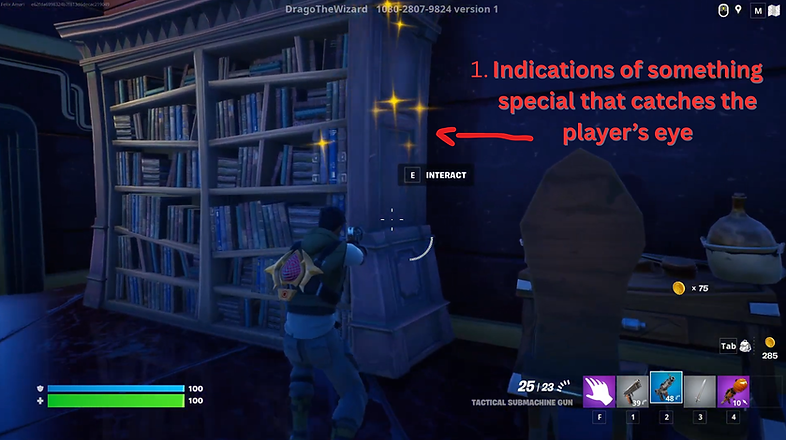
During the blockout phase, I turned my sketches into a playable mansion. The sketches were inspired by COD Zombies Map Groesten Haus which set the foundation for the layout and the progression. I focused on incorporating multiple rooms that had different weapons and ammo, allowing the player to prioritize what's most important to their escape. Signposting was a key factor here, ensuring the game was directing you on where to go for escaping while ensuring you pass by some weapons and ammo.
Three key components to enhance player progression were:
-
Rifts: These offered players to take alternative routes to get around the mansion quicker without having to use coins to open doors. Sometimes they lead you to more enemies and others lead to new rooms. This was part of our risk vs reward system. The goal was to have these be used as an escape option in case the player felt overwhelmed in their current situation.
-
Secret Rooms: I hid about 5 different secret rooms throughout the mansion that if the player found them, it would give them powerful weapons that they can use to gain more coins for less ammo. This served as a way to reward players that take time to explore and unlock all the secrets of the mansion.
-
Locked Doors: These doors are the backbone of the entire game because not only is it a way to find new items but it is used to actually escape overall. This encourages player choice because all doors are different prices based on the floor level you are on. The higher the door cost, the better items you will find.
Each of these components were integrated into the blockout phase, serving as the fundamental elements to create a fun haunted mansion.


Initial player inventory to start the game off with. This shows the player that they will need better weapons to escape.

Locked Door Cost

Once you get to the end, there is a mystery wheel that gives you powerful weapons and some that have unlimited ammo. This provides the ultimate weapons to defeat the strongest fiends on the first floor.
Full Playthrough
Iterations
Since we only had 10 weeks to make this happen, I prioritize player progression and gameplay due to being the only level designer on my team.
During the class, I took charge of hosting playtest sessions in my college dorm room with my residents to constantly get feedback on our game. Feedback on any game is super important and since our game can be played with up to 4 people, it was important to test with multiple people.
To enhance the experience for players, I implemented more secret rooms and higher coins received for different types of enemies. These changes made players fully explore the mansion even when they had the coins to escape because they wanted to find everything.
Conclusion
Through careful attention to multiplayer, we were able to produce our own creative project and have it published to Fortnite.
This level was the start to understanding progression and balancing gameplay when creating games. Drawing inspiration from COD Zombies, my objective was to create an experience that players would keep coming back to so they can discover all the different ways to escape the mansion.
From choosing what doors to open to gaining powerful weapons to escape, every element was carefully thought about to allow players from around the world to have fun on our map. I enjoyed working with UEFN and hope to return to it down the line!